Pixel by Pixel: The People Spending Entire Weekends Scanning Photos Nobody Else Will Ever Search For
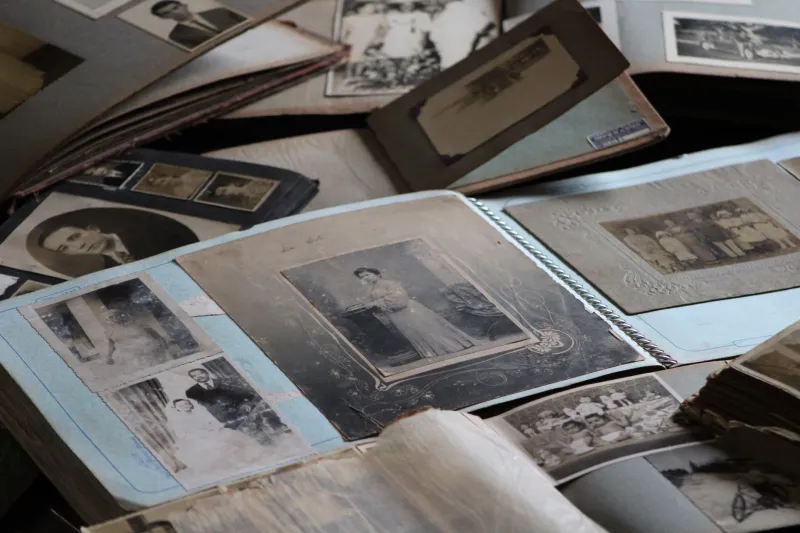
Somewhere in a suburb outside Columbus, Ohio, a woman named Denise is on hour six of a Saturday she has devoted entirely to scanning photographs of her grandmother's 1971 trip to Niagara Falls. She's not a professional archivist. She doesn't work in a museum. She's an accounts manager who, three years ago, inherited a Rubbermaid tub full of faded Kodachrome prints and made a decision that would quietly take over her life.
"I told myself it would take a month," she says. "I have four more tubs."
Denise is not alone. Across the country, a loosely organized community of hobbyists has turned the humble task of digitizing old family photos into something closer to an obsession — complete with professional-grade equipment, elaborate tagging systems, and a level of metadata discipline that would impress a Silicon Valley data engineer. They call themselves all kinds of things: memory keepers, photo archivists, digital preservationists. But honestly? Spreadsheet archaeologists might be more accurate.
The Setup Is Never Simple
If you think this hobby starts with plugging in a cheap flatbed scanner and hitting "go," you have not spent enough time in the forums. The entry-level crowd might start with a $150 Epson and a free copy of Google Photos. But the deep-end folks? They're talking about scanning at 1200 DPI minimum, color calibration targets, dedicated archival software like DigiKam or Lightroom, and storage setups that involve redundant hard drives, off-site cloud backups, and the 3-2-1 rule (three copies, two formats, one off-site location).
Marcus, a 44-year-old high school history teacher from outside Denver, spent close to $800 on equipment before he scanned a single photo. He has a dedicated scanning station in his basement — good lighting, a anti-static mat, a spreadsheet template he built himself that tracks the photo's estimated date, location, people identified, confidence level of each identification, and which family member provided the information.
"Confidence level?" you ask.
"Yeah," he says, completely seriously. "Because Aunt Lorraine says that's definitely the Fourth of July, 1968, but based on the clothing I think it might be 1966. So I log both and flag it as 'disputed.'"
This is normal here. This is Tuesday.
The Nostalgia Engine
So what actually drives someone to spend three hundred hours cataloging photographs of people who, in many cases, are no longer alive?
The psychology isn't that hard to unpack once you start pulling at the thread. For a lot of people, this hobby exploded during the pandemic, when the combination of free time, proximity to old family stuff, and a general sense of existential dread made the idea of preserving something feel urgent. The photo album sitting in a closet wasn't just a photo album anymore. It was proof that people existed. That your family had a history. That time was, in fact, passing.
But there's something else at work beyond pandemic-era mortality spirals. For a certain kind of person — the organized, the detail-oriented, the person who color-codes their grocery list — this hobby scratches a very specific itch. It's not just about the photos. It's about the system.
"I genuinely love the tagging," admits Priya, a 38-year-old software developer from the Bay Area who has digitized over 4,000 family photos spanning three generations and two continents. "Like, I built a controlled vocabulary for location tags. I'm not just tagging 'India' — I'm tagging the specific city, the neighborhood if I know it, the approximate coordinates. It's a whole thing."
She pauses. "My husband thinks I need a different hobby."
The Gear Spiral Is Real
Like most hobbies that attract a certain type of obsessive, the equipment rabbit hole here is genuinely bottomless. Once you've gone 1200 DPI, someone in the forum will tell you that 2400 is really the minimum for slides. Then you're looking at dedicated film scanners. Then you're learning about ICE technology for dust removal. Then you're down a Reddit thread at 1 a.m. debating whether the Plustek OpticFilm 8200i is worth the price jump over the 8100.
The answer, according to four different forum regulars, is yes. Absolutely yes. Don't even ask.
Beyond the hardware, there's a whole ecosystem of software debates — whether to use proprietary platforms like Mylio or Narrative, whether Apple Photos is "good enough" (consensus: no), and whether AI-assisted facial recognition is cheating or just practical. (Consensus: complicated.)
The Faces You Can't Name
Here's the part of this hobby that nobody really talks about at first, but that almost everyone eventually brings up: the strangers.
Every old photo collection has them. People standing at the edge of a party, or sitting next to your grandmother at a table, whose names nobody living can remember. Faces that clearly mattered to someone, once. People who showed up in three different photos across two different decades and are just... unidentified.
For many archivists, these mystery figures become a quiet fixation. Some post to genealogy forums. Some try DNA testing services hoping a distant cousin will recognize a face. Some just tag them "Unknown Person 7" and move on, but the tag sits there like an open question.
"I have a woman I call 'the blue dress lady,'" says Denise. "She's in six photos from the late 1950s. Nobody in my family knows who she is. I've been looking for two years."
She says it with the same energy someone might use to describe a true crime case they can't let go of. Which, honestly, tracks.
Is This Actually Useful?
The practical argument for photo digitization is solid: prints fade, albums deteriorate, houses flood and burn. Getting analog memories into a stable digital format is genuinely a good idea, and most professional archivists would tell you that.
But let's be honest about what's happening in the deep end of this community. Nobody needs a confidence-rated metadata field for disputed photo dates. Nobody needs a controlled vocabulary for location tags. The spreadsheet, the system, the taxonomy — that's not preservation. That's the hobby. The photos are almost secondary.
And you know what? That's fine. That's kind of the whole point. The best hobbies are the ones where the thing you're ostensibly doing is just the excuse to do the thing you actually love. For this crowd, the thing they love is the catalog. The order imposed on chaos. The feeling of a box of faded, unlabeled prints becoming a searchable, cross-referenced, color-calibrated archive.
The fact that nobody else will ever search it is, somehow, beside the point.
"It's for my kids," Marcus says. "Or their kids. Or whoever wants it someday."
He pauses and looks at his spreadsheet.
"Also, I just really like doing it."
Honest enough.