Happy Meal, Serious Business: The Collectors Paying Real Money for Your Childhood Trash
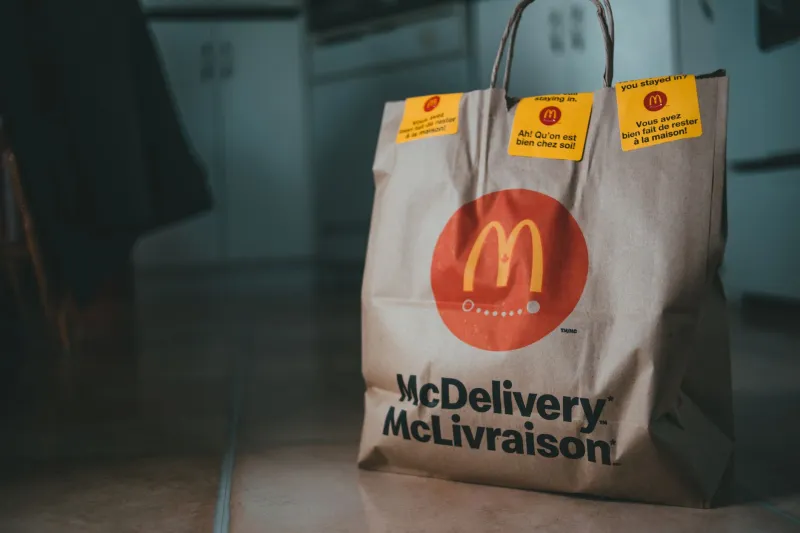
Let's say you were seven years old in 1992. Your parents took you to McDonald's. You got a Happy Meal. Inside was a small plastic McDino Changeables figure — a Triceratops that transformed into a cheeseburger. You played with it for a week, lost it under the couch, and forgot it existed entirely.
Somewhere right now, a collector in Tucson is paying $34 for that figure. Loose. In box, it goes for closer to $85.
Welcome to the fast food memorabilia market, which is a real thing that real adults take very, very seriously.
The Stuff You Thought Was Junk
Walk through any serious collector's inventory and the breadth of what counts as "fast food memorabilia" is genuinely staggering. We're not just talking Happy Meal toys, though those are the crown jewels of the hobby. We're talking promotional drinking cups from the 1970s and 80s — the heavy plastic kind with characters printed in ink that's slowly flaking off. Tray liners. Paper bags with regional artwork. Employee pins and pins from promotional campaigns. Collector's glasses tied to movie releases. Stuffed animals given away for a single summer. Cardboard standees. Scratch-off game pieces. The little ceramic figurines Hardee's gave out in the early 1990s that almost nobody remembers.
All of it has a market. All of it has graders, condition standards, and collectors who will argue with you for forty-five minutes about the difference between "excellent" and "near mint" when it comes to a plastic Grimace bank from 1977.
How Did We Get Here?
The fast food nostalgia collecting community has existed in some form since at least the early days of eBay, where the first listings for vintage McDonald's promotional items started appearing in the late 1990s. But the hobby has expanded significantly in the last decade, driven partly by the same nostalgia wave that's pushed 80s and 90s collectibles across the board, and partly by social media — specifically TikTok and Instagram accounts dedicated to fast food history that have brought new collectors into the fold.
Jared, a 41-year-old from suburban Chicago who has been collecting since 2008, describes the community as "way bigger than people expect and way more serious than people believe."
"I've sold a complete set of 1979 McDonald's Collector Series glasses for $200," he says. "I've seen mint-in-box Burger King Kid's Club toys from 1990 go for $60 a piece. People think this stuff is worthless because it came from a fast food restaurant. But rarity is rarity."
The McDonald's Premium
Within the fast food collecting world, McDonald's occupies a position similar to what Nike holds in sneakers: it's the big tent, the one that drives prices, the one with the most obsessive subcommunities. And within McDonald's collecting, Happy Meal toys are the blue-chip asset.
The variables that drive value are specific and fiercely debated. Age matters, obviously — pre-1985 items command serious premiums. Condition is everything, with "sealed in original bag" being the holy grail. Regional exclusives — toys that were only distributed in certain markets — are particularly prized because they're harder to find and harder to authenticate. And then there are the recalled items, which occupy a special category of desirability.
In 1987, McDonald's briefly distributed a set of Cabbage Patch Kids-themed Happy Meal toys that were recalled due to a choking hazard concern. A complete recalled set in original packaging has reportedly changed hands for over $300. The danger, apparently, is part of the appeal.
Beyond McDonald's, collectors are equally devoted to Burger King's late 80s and early 90s toy runs — particularly the Kids Club figures, which had a remarkably diverse cast for the era and generated multiple waves of themed toys. Wendy's promotional merchandise is considered undervalued by serious collectors, who point to the brand's relatively short promotional campaigns as a source of genuine scarcity. And Taco Bell's 1996 Space Jam promotion, which generated a set of cups and figurines tied to the film, has become a genuine collector's item thanks to the ongoing cultural revival of the movie.
The Authenticity Problem
As prices have risen, so has the incentive to fake. And yes, fake fast food memorabilia is a real concern.
The most common issue isn't outright counterfeiting — the margins on a $40 Happy Meal toy don't really support that — but misrepresentation. Toys sold as "mint in bag" that have been resealed. Items described as original when they're later reproductions. Regional exclusives that turn out to be standard releases. Condition grades that are, charitably, optimistic.
The community has developed informal authentication practices: known provenance is valued, longtime sellers with feedback histories are trusted, and certain Facebook groups and Discord servers function as informal grading communities where you can post photos of a potential purchase and get opinions from people who've handled thousands of these items.
"I've saved myself from bad purchases probably a dozen times by posting in the group," says Tamara, a 35-year-old collector from Nashville who specializes in Wendy's and Arby's promotional items from the 1980s and 1990s. "Someone always knows. Someone always has a reference photo."
The Weird Overlap With Fine Art Collecting
Spend enough time in this community and you start to notice something: the language collectors use is almost identical to the language of fine art or vintage wine. Provenance. Condition grades. Market comparables. Authentication. The conversation around a 1986 McDonald's Muppet Babies cup is structurally indistinguishable from a conversation about a minor Impressionist print.
This is not an accident. Collecting culture, regardless of the object, tends to converge on the same vocabulary because it's solving the same problem: how do you assign value to something that has no inherent monetary worth beyond what a community agrees to pay?
The answer, always, is scarcity plus desire plus shared cultural memory. Fast food memorabilia has all three. These objects are scarce because nobody thought to save them. They're desirable because they're tied to formative childhood memories that a specific generation shares with unusual intensity. And the cultural memory is powerful precisely because it's so mundane — because everyone ate at McDonald's, and almost everyone can close their eyes and remember the specific weight of a 1991 Happy Meal box.
The Part Where You Check Your Storage Unit
Here's the thing about this hobby that nobody in the community will stop pointing out: there is almost certainly fast food memorabilia sitting in attics, basements, and storage units across America that people have no idea is worth anything.
The Garfield mug series McDonald's released in the late 1970s. The Snoopy glasses from the early 80s. Any sealed Happy Meal bag from before 1990. Regional promotional items from chains that no longer exist — remember Roy Rogers? Rax? Druther's? Those regional chains are particularly fertile ground for collectors because their promotional runs were smaller and almost nobody thought to preserve them.
"I bought a box of Rax promotional cups at an estate sale for eight dollars," Jared says. "Sold them for $340."
So maybe go look in that storage unit. Just in case.