Chasing Ghosts in a Bottle: The Amateur Perfumers Rebuilding Scents From Memory and Old Magazine Ads
Somewhere in a climate-controlled spare bedroom in suburban Ohio, there are 300 small brown bottles arranged on a shelf system that took two weekends to build. Each bottle is labeled in a cramped hand: benzyl acetate, iso e super, hedione, labdanum absolute, orris root. The room smells like the inside of a fever dream — sweet and woody and slightly medicinal and somehow also like walking into a department store in 1987.
This is where Carolyn Marsh, 47, goes to chase ghosts.
The ghost she's currently chasing is Jean Patou's "Colony," a vintage fragrance launched in 1938 and discontinued sometime in the 1990s. She's never smelled it. She's working from a 1940s magazine advertisement, three forum posts written by people who have, a partial ingredient list she found in a French perfumery archive, and whatever she can reverse-engineer from a nearly empty sample vial she acquired on eBay for $60.
"I know that sounds completely unhinged," she says cheerfully. "It probably is."
The Art of Smelling Something That Doesn't Exist
Discontinued fragrances occupy a strange emotional space. Unlike a canceled TV show or an out-of-print book, you can't pirate a smell. You can't find a rip on some sketchy website. When a fragrance is gone — really gone, reformulated beyond recognition or simply off the market — what remains is description. Adjectives. The unreliable testimony of memory.
For most people, that's just a mild disappointment. For a specific, deeply committed subset of fragrance enthusiasts, it's a challenge.
The community of amateur fragrance recreators is small but surprisingly organized. They congregate on Reddit's r/DIYfragrance, in Discord servers, on long-running forums like Basenotes and Fragrantica, and in email threads that read like collaborative academic papers. They share sourcing tips for aromachemicals. They debate reconstruction methodology. They post "progress updates" on multi-year projects. The vibe is somewhere between mad scientist, historian, and obsessive fan.
What drives someone to spend months — sometimes years — trying to rebuild a smell from scratch? The answers vary, but they tend to circle back to the same core thing: the feeling that something real and irreplaceable was lost, and the refusal to just accept that.
The Evidence You Work With
Reconstructing a discontinued perfume is fundamentally a detective problem with a deeply unreliable witness: human memory.
Fragrance memory is powerful but imprecise. People remember impressions — "it smelled like a garden after rain" or "there was something almost medicinal underneath" — rather than chemical compounds. Getting useful information out of someone who remembers a perfume from 30 years ago requires the kind of careful interviewing that a good journalist or therapist might recognize.
Jordan Fisk, 31, a former chemistry student who now works in software and recreates fragrances as a hobby, has developed what he calls his "interview protocol" for talking to people who remember discontinued scents. "You can't ask 'what did it smell like?' because people just say 'flowers' or 'clean' and that tells you nothing," he explains. "You have to ask things like: Did it feel heavy or light? Did it change on your skin over time? What did it remind you of? What would you eat if you smelled it?" That last question, he says, is surprisingly revealing.
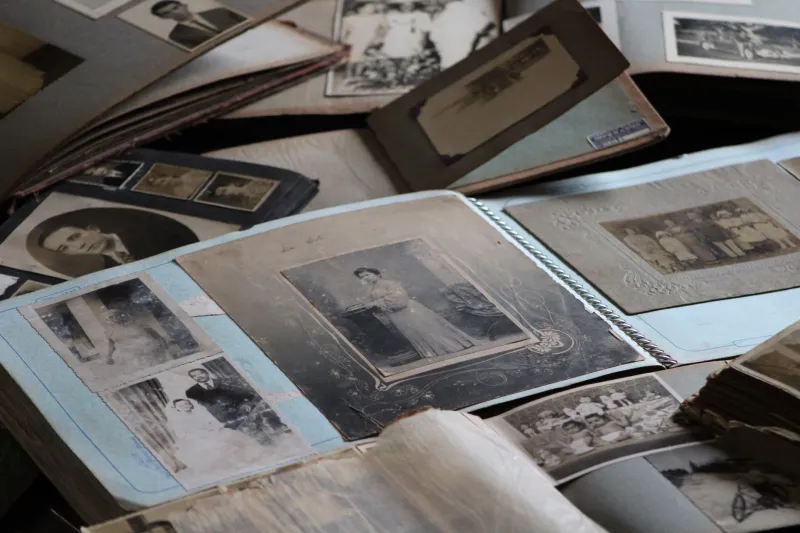
Beyond memory interviews, recreators mine old advertisements for clues — marketing copy from the era can tell you a lot about what a brand was going for, even if it's couched in poetry rather than chemistry. Vintage beauty magazines, newspaper archives, and even old department store catalogs are all fair game. Some devotees have gotten surprisingly far using ingredient lists from old patents, which are public record.
And then there are the sample vials. The holy relics of the discontinued fragrance world. People who own authenticated vintage samples of truly gone fragrances are treated with a reverence usually reserved for archivists and museum curators. Getting access to even a small sniff of the real thing is considered a major research breakthrough.
The Chemistry of Guesswork
Once you have your evidence, you still have to actually build the thing. And that's where the chemistry comes in.
Modern fragrance recreation relies on a toolkit of aromachemicals — synthetic molecules that form the backbone of almost every commercial perfume — plus natural absolutes and essential oils. Learning to work with these materials is itself a years-long project. Some smell nothing like what their names suggest. Hedione, a key component of many classic perfumes, smells almost nothing on its own but transforms everything around it. Iso E Super, used in countless woody fragrances, can smell like cedar to one person and pencil shavings to another.
Carolyn started her hobby with a beginner kit from a fragrance supply company, the kind marketed to people who want to make candles. She quickly outgrew it. Now she orders from professional suppliers, spending a few hundred dollars a year on materials, and she's built up enough experience that she can smell a fragrance and start making educated guesses about what's in it.
"I got about 60% of the way to Colony and then hit a wall," she says. "There's something in the base — a warmth, almost animalic — that I can't pin down. My current theory is that the original used a natural civet absolute, which you basically can't get anymore for ethical reasons. So I'm trying to approximate it with synthetic alternatives. It's not the same, but maybe it's close enough to capture the feeling."
That phrase — "capture the feeling" — is key. Most recreators are clear that what they're making isn't a copy. It's an interpretation. A tribute. They're not trying to fool anyone; they're trying to honor something that mattered.
The Line Between Tribute and Something Stranger
It would be easy to psychoanalyze the discontinued fragrance community — to say it's about grief, or nostalgia, or the human refusal to accept loss. And there's probably some truth to that. But spending time with these people, what comes through more than anything is genuine intellectual passion.
They love the problem. They love the research. They love the community of other weirdos who care about the same obscure, intangible thing. The ghost of a perfume is just the MacGuffin. The real point is the chase.
"I'll probably never perfectly recreate Colony," Carolyn admits, arranging a row of test strips on her workbench. "But I'll make something interesting trying. And maybe someone else will smell my version and get a little closer. That's kind of how this works."
She uncaps a small vial and holds it out. It smells like something between jasmine and the inside of an old leather bag, with something warm and almost edible underneath. It smells, in other words, like somewhere you've never been but somehow remember.
Whether that's Colony or not, nobody alive can say for certain. But it's something. And in the absence of the real thing, something is everything.