From the Track to the Backyard: Why Regular Americans Are Dropping Serious Cash to Save Racehorses
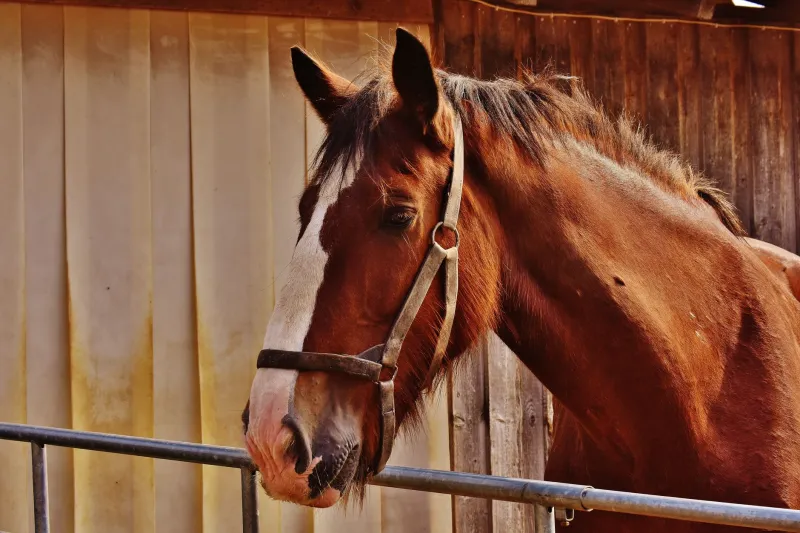
Somewhere in rural Tennessee, a woman named Deb is hand-feeding a 1,200-pound thoroughbred named Rocket Fuel his third specially formulated grain meal of the day. Rocket Fuel ran twelve races, earned his connections about $40,000 in purse money, and then got claimed for $6,500 and essentially disappeared from the official record. He was four years old. He was also, by most industry standards, done.
Deb is a pediatric nurse. She does not own a farm. She boards Rocket Fuel at a facility forty minutes from her house and drives out four times a week. She has spent, by her own estimate, somewhere north of $18,000 in the past two years between board, vet bills, farrier visits, and the kind of specialized rehabilitation that comes with an animal whose entire early life was shaped around one very specific, very intense job.
She would do it again without blinking.
"People think I'm insane," she told me. "And maybe I am. But the first time he actually relaxed — like, genuinely just stood there and breathed — I cried for twenty minutes."
This is the rabbit hole of off-track thoroughbred adoption, and it goes deep.
How a Racing Industry Problem Became an Everyday Person's Passion Project
The math of horse racing has always been uncomfortable. The industry produces roughly 20,000 thoroughbred foals a year in the United States. The vast majority of those horses will race for a few years, and then — because the economics of keeping a non-earning horse are brutal — they'll need somewhere to go. Some get retrained as sport horses or pleasure horses. Some go to auction. And some, historically, ended up in places nobody wanted to think about too hard.
Over the past decade or so, a combination of public pressure, industry reform, and the sheer unstoppable force of the internet has started shifting that equation. Organizations like the Retired Racehorse Project and the OTTB (Off-Track Thoroughbred) community online have turned what used to be a quiet, niche rescue pipeline into something that looks a lot more like a movement.
The Facebook groups alone are staggering. There are dozens of them — regional rescue networks, breed-specific rehab communities, pages dedicated entirely to matching horses with adopters — and collectively they have hundreds of thousands of members. TikTok and Instagram have added a whole new layer of visibility, with accounts documenting the slow, often messy, frequently expensive process of bringing a racehorse back from the edge of burnout.
And the people doing this? They are not who you'd expect.
The Adopters Nobody Predicted
The popular image of a horse owner in America is someone wealthy, probably from an old-money family, with a sprawling property and a full-time barn manager. That image has never been entirely accurate, but it's especially wrong when it comes to the OTTB rescue world.
Meet Marcus, a high school history teacher in Ohio who adopted a mare named Lucky Proposition three years ago after stumbling onto an adoption listing while procrastinating on a Sunday afternoon. He had ridden horses exactly twice in his life. He now takes weekly riding lessons, volunteers at his boarding barn on weekends, and moderates a 12,000-member Facebook group for first-time OTTB owners in the Midwest.
"I went looking for a used car and somehow ended up with a horse," he said. "The internet is a dangerous place."
Or consider Priya, a graphic designer in Colorado who first learned about off-track thoroughbreds through a viral TikTok series following a rescue organization's intake process. She spent six months researching before adopting. She built a spreadsheet. She interviewed four different boarding facilities. She consulted with an equine nutritionist before the horse even arrived.
"I treated it like a product launch," she said, laughing. "Which is insane, but also probably why my horse is thriving."
What connects these people — and the thousands like them scattered across the country — isn't money, or a rural upbringing, or any particular equestrian background. It's a specific kind of obsessive curiosity that, once triggered, doesn't really have an off switch.
The Part Nobody Tells You About
Here's the thing about racehorses that the feel-good adoption posts don't always capture: these animals are complicated. A thoroughbred coming off the track has spent its entire life in an intensely structured environment. Every meal, every movement, every social interaction has been managed and controlled. They've been conditioned to run at full speed when asked, to live in stalls for most of the day, and to operate under a level of physical and psychological pressure that most horses never experience.
Then they get adopted by a teacher from Columbus, put in a pasture with three other horses, and expected to just... chill out.
It doesn't always go smoothly.
"The first three months were genuinely terrifying," Marcus admitted. "She was reactive to everything. A plastic bag, a dog, a kid on a bike two fields away. I had no idea what I was doing."
Rehabilitation timelines vary wildly — some horses settle into their new lives within weeks, others take years to decompress. The process often involves specialized veterinary care, careful nutritional management (racehorses are frequently underweight or have gut issues by the time they retire), and a slow, patient approach to retraining that requires either serious riding skill or serious humility about your own limitations.
This is why the online communities aren't just social spaces — they're genuine support networks. First-time adopters post videos of concerning behavior and get feedback from experienced owners within hours. Veterinary questions get answered. Farriers get recommended. People who've been through the process share what worked and what didn't, with a frankness and generosity that's kind of remarkable.
"I've gotten better advice from that Facebook group than from half the professionals I've hired," Priya said. Not as an insult to the professionals — just as a testament to the depth of collective knowledge that's accumulated in these spaces.
Why This Rabbit Hole Keeps Getting Deeper
There's something particular about the OTTB world that makes it especially sticky once you're in it. Part of it is the horses themselves — thoroughbreds are famously sensitive, intelligent, and opinionated in ways that make the relationship feel unusually reciprocal. When a horse that's been through the wringer finally starts to trust you, people describe it in terms that sound almost spiritual.
But part of it is also the community, which has this underdog energy that's hard to explain. These are people who chose the hard version of horse ownership on purpose, who are constantly problem-solving and learning and occasionally getting humbled by an animal that outweighs them by a factor of ten. There's a camaraderie in that.
Deb, back in Tennessee, put it this way: "Nobody got into this because it was easy or cheap or sensible. We all got into it because something clicked and we couldn't walk away. That means everyone here gets it. You don't have to explain yourself."
Rocket Fuel, for his part, has learned to accept belly scratches. He still spooks at plastic bags. He is, by any reasonable financial analysis, an extremely expensive hobby.
Deb has already started looking at listings for a second horse.
Some rabbit holes, it turns out, come with a pasture attached.