Pin It, Frame It, Love It: How Dead Bugs Became the Hottest Aesthetic Hobby for Young Americans
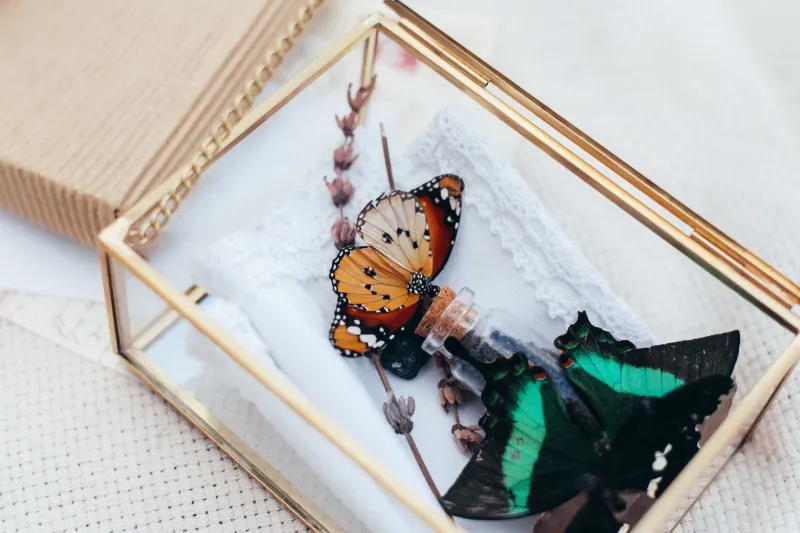
There's a shadow box hanging above Emma's desk in her Portland apartment. Inside it, three iridescent beetles are mounted on white foam, their shells catching the afternoon light like tiny jewels. Below them, a single morpho butterfly — wings spread, impossibly blue — anchors the arrangement. It looks like something from a natural history museum. It cost her about forty dollars and a weekend afternoon to put together.
"People always ask me if it's creepy," she says, laughing. "And I get it. But when you actually look at them — like, really look — they're just beautiful. They're nature's jewelry."
Emma is part of a growing wave of millennials and Gen Z Americans who've taken up insect collecting, and they're transforming what was once a fusty Victorian hobby into something that feels genuinely fresh. It's showing up in TikTok feeds, Etsy shops, and interior design mood boards, and the community around it is bigger and more enthusiastic than you might expect.
A Hobby With Very Old Roots
First, a little context. Entomological collecting — the formal term for bug collecting — is ancient by hobby standards. Natural historians in Europe were pinning and cataloging insects as far back as the 1500s, and by the 1800s it had become a full-blown genteel obsession. Charles Darwin collected beetles obsessively as a young man. Victorian households kept elaborate display cases. It was, at various points, considered both a serious scientific pursuit and a fashionable parlor activity.
In the twentieth century, collecting shifted primarily into academic and scientific contexts. The image of the bug collector became associated with eccentric professors and dusty university storage rooms — not exactly aspirational. Entomology retained its scientific importance, but the casual hobbyist largely drifted away.
Then the internet happened, and then TikTok happened, and suddenly a twenty-three-year-old in Ohio discovered that mounting beetles was meditative, visually stunning, and extremely satisfying to document on camera.
The Cottagecore Connection
You can't talk about the insect collecting revival without talking about cottagecore, the aesthetic movement that romanticizes rural life, natural materials, and a kind of dreamy, pre-industrial relationship with the world. Think linen aprons, foraged mushrooms, wildflower arrangements, and — yes — framed insects on the wall.
Cottagecore gave bug collecting a visual language that resonated with younger audiences who were already drawn to the aesthetic. A pinned atlas moth isn't just a dead insect in that context; it's a piece of natural art, a meditation on impermanence, a conversation starter. It fits the same impulse that drives people to press flowers, collect vintage botanical prints, or keep terrariums on their windowsills.
Instagram and Pinterest accelerated the trend by making it easy to see what a beautifully curated insect collection actually looks like. Once people realized these things were genuinely gorgeous — and achievable — the curiosity snowballed.
TikTok Did the Heavy Lifting
If cottagecore provided the aesthetic framework, TikTok provided the tutorial pipeline. Creators in the entomology space have built substantial followings by documenting the collecting and mounting process in satisfying, watchable detail. Videos showing the "relaxing" of dried specimens (a process where insects are rehydrated so their joints become workable again), the careful spreading of wings, and the final pinning and labeling have racked up millions of views.
Part of the appeal is the ASMR-adjacent quality of the content — slow, deliberate, quiet work that feels meditative to watch. Part of it is the before-and-after satisfaction of seeing a crumpled specimen transform into something display-ready. And part of it is simply that bugs, when photographed well, are spectacular.
"I watched one video of someone mounting a hawk moth and I was like, I have to do that," says Marcus, a 27-year-old graphic designer from Austin. "I ordered a starter kit that same night. Now I have like sixty specimens and I'm running out of wall space."
Ethical Collecting in the Modern Era
One of the most interesting aspects of the contemporary collecting community is how seriously it takes sustainability and ethics — a notable departure from the anything-goes collecting culture of earlier centuries.
Modern collectors are generally emphatic about not harming living populations of rare or threatened species. Many focus exclusively on insects found already dead — window-killed moths, roadkill beetles, specimens found in spider webs. Others raise insects themselves, collecting only from their own populations. The community has developed strong informal norms around responsible sourcing, and newcomers are typically educated about them quickly.
This ethical dimension actually appeals to a lot of younger collectors, who can engage with the hobby without feeling like they're contributing to environmental harm. It aligns with broader values around sustainability and nature appreciation that are prominent in millennial and Gen Z culture.
"I only collect ethically sourced specimens or ones I find naturally dead," says Priya, a 24-year-old from Chicago who runs a small Etsy shop selling mounted insects. "The whole point, for me, is celebrating these animals. That would feel completely contradictory if I was killing things that didn't need to die."
The Science Sneaks In
Here's something that surprises a lot of new collectors: the hobby is a genuine gateway into entomology. When you start mounting insects, you naturally want to know what you have. That means identification, which means taxonomy, which means learning about life cycles, habitats, and ecological roles. Plenty of people who started collecting purely for aesthetic reasons have ended up genuinely fascinated by insect science.
Some have even connected with academic entomologists and contributed to citizen science projects, donating specimens or data to university collections. It's a neat feedback loop — a trend that starts as a vibe and ends up producing people who can lecture you about the difference between a longhorn beetle and a click beetle.
Where to Start If You're Curious
The barrier to entry is genuinely low. A basic insect mounting kit — which includes pins, foam spreading boards, and labels — runs between fifteen and thirty dollars on Amazon. Starter specimens can be purchased ethically from established dealers on Etsy or specialty entomology supply sites. And TikTok's collecting community is famously welcoming to beginners.
The learning curve is real but not steep. Your first few mounts will probably look a little rough. By your tenth, you'll be doing something you're actually proud to hang on the wall.
And if you end up spending a Saturday afternoon carefully spreading the wings of a cecropia moth while listening to a podcast, feeling weirdly calm and connected to the natural world — well, that's kind of the whole point.
Welcome to the rabbit hole. It's got really good lighting in here.