Clicky, Tactile, or Linear: Inside the Cult of People Who've Spent More on a Keyboard Than a Used Car
Let's set the scene. You're at your desk, typing an email, doing absolutely normal human things. Your coworker leans over and says, "Is that a Holy Pandas build with a brass plate?" You don't know what that means. You nod politely. Three weeks later, you've spent $340 on switches you haven't even installed yet, you're on a waitlist for a keycap set that won't ship until 2026, and you're watching a 47-minute YouTube video about switch lubing technique at 11:30 on a Tuesday night.
Welcome to the mechanical keyboard hobby. Population: more people than you'd think, and every single one of them will tell you it's "totally reasonable" to own six keyboards.
It Started With a Switch (It Always Does)
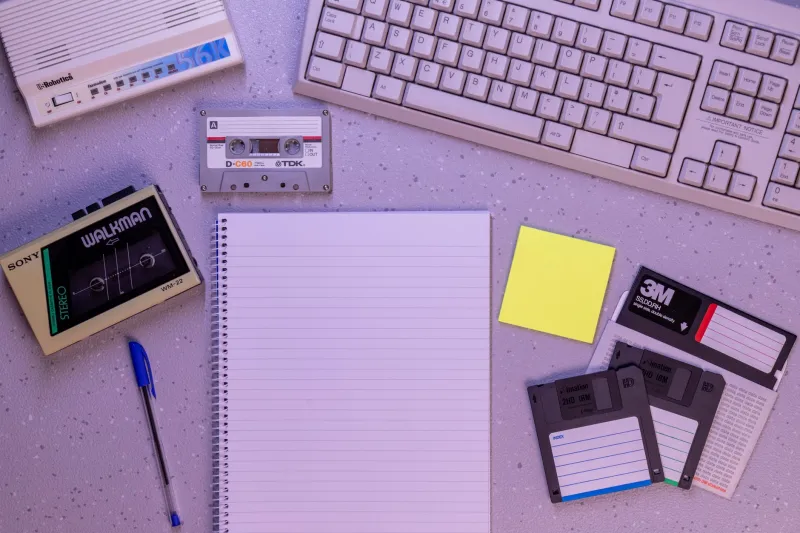
Here's the thing about mechanical keyboards — they're not new. Vintage IBM Model M keyboards from the late 1980s are basically the holy relics of this community, and for good reason. The tactile feedback, the satisfying clunk, the feeling that you are communicating with the machine rather than just poking at a membrane — it's genuinely different. Once you've typed on a real mechanical switch, the flat chiclet keyboard on your laptop starts to feel like pressing your fingers into wet bread.
But what's happened over the last decade or so has gone way beyond just preferring a clicky keyboard. The hobby has evolved into something that looks a lot more like sneaker collecting or vintage watch culture than anything you'd find in the computer accessories aisle at Best Buy. People are hunting down New Old Stock Alps switches — that's unused switches still in their original packaging from decades ago — with the same energy that sneakerheads bring to tracking down a deadstock pair of Air Jordans.
And yes, they are paying comparable prices.
The Taxonomy of Obsession
If you want to understand this world, you first need to understand that mechanical keyboard enthusiasts have an almost religious relationship with switch types. There are three main camps: clicky (you hear it, you feel it, your coworkers hate you), tactile (you feel the bump but it's quieter, a compromise that satisfies no one completely), and linear (smooth keystroke, no feedback, beloved by gamers and people who like things that feel like butter).
This is not a casual preference. This is identity. People on Reddit's r/MechanicalKeyboards — a community with millions of members — will debate the merits of a specific switch variant with the same intensity that film buffs argue about director's cuts. Bring up Cherry MX Browns in the wrong crowd and watch the room turn.
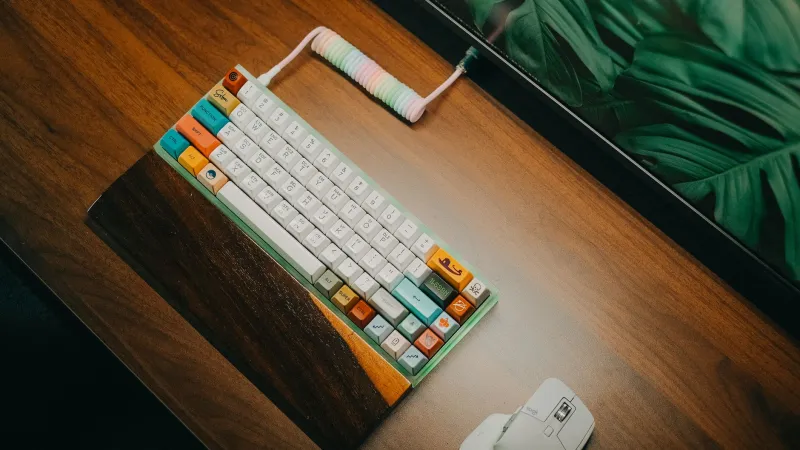
Then there are the custom builds. Forget buying a keyboard off a shelf. Serious hobbyists are sourcing custom-designed aluminum cases (sometimes machined from a single block of metal), hand-selecting their switches, buying separate stabilizers, lubing every individual component by hand with tiny brushes and specific lubricant formulas, and then carefully assembling everything like they're building a watch. The whole process can take hours. Some people do it every time they want to try a new configuration. This is not considered unusual behavior within the community.
Group Buys: The Hunger Games of Keyboard Culture
Here's where it gets genuinely strange to outsiders: the group buy system. Because many of the most desirable keyboards and keycap sets are produced in small batches by independent designers, the community funds them in advance through group buys — essentially a Kickstarter model where you pay upfront and then wait. Sometimes for a very long time.
Waiting 18 months for a keycap set is not uncommon. Waiting two years is not unheard of. Some group buys have famously gone sideways, with designers disappearing or production problems stretching timelines into absurdity. And yet, the group buy calendar stays packed. Because when that package finally shows up at your door and you pull out a set of perfectly sculpted, legends-dyed keycaps in exactly the colorway you wanted? Apparently it's worth every second of the wait.
The prices reflect the craftsmanship and scarcity. A premium keycap set can run $150 to $200. A custom keyboard case might be $200 to $500. Add in a quality switch set, a PCB, plate, and stabilizers, and you're looking at a typing experience that costs more than many people's rent. Collectors have setups valued in the thousands of dollars — plural — and they often have more than one.
The Vintage Hunt
If modern custom builds are the high-fashion side of this hobby, vintage hunting is the archaeology department. Certain switches produced in the 1980s and early 1990s — particularly those made by Alps Electric, a Japanese manufacturer — are considered by many enthusiasts to be mechanically superior to anything produced today. The tactile feedback on a vintage Alps Simplified or Complicated switch (yes, those are the actual names) has a character that modern manufacturers have struggled to replicate convincingly.
Finding them means digging through estate sales, eBay listings with terrible photos, old office equipment auctions, and dusty corners of surplus electronics stores. Keyboards from that era — old Apple extended keyboards, certain Dells, various IBM machines — are harvested for their switches the way a restorer might strip a vintage car for parts. The boards themselves might be yellowed and cracked, but the switches inside? Pristine. Valuable. Carefully desoldered and catalogued.
Some collectors have literal jars of switches sorted by type, year, and condition. This is considered organized, not eccentric.
Why, Though?
That's the question that people outside the hobby always ask, and it's a fair one. You spend eight hours a day typing. Why wouldn't you want that experience to be as good as it possibly can be? The ergonomic argument is real — the right keyboard can reduce fatigue and improve your relationship with work in a genuinely meaningful way.
But honestly, for most people deep in this hobby, the functional justification is secondary. It's the same reason people collect vintage fountain pens or spend weekends restoring old motorcycles. There's a tactile, analog satisfaction to it that's increasingly rare in a world of disposable tech. You built something. You chose every component. When you sit down to type, you're using an object that is entirely yours in a way that an off-the-shelf product never could be.
Plus — and the community will tell you this themselves — there's something deeply funny about the whole thing. These are people who are passionately, elaborately obsessed with keyboards. They know it. The memes are good. The self-awareness is part of the appeal.
The Sound of Going Deeper
If you've made it this far and you're feeling the pull, consider yourself warned. The rabbit hole here is genuinely bottomless. There are entire sub-communities devoted to sound profiles — people who foam-mod their cases, tape-mod their PCBs, and experiment with different desk mats specifically to tune the acoustic properties of their typing experience. There are sound tests on YouTube with millions of views. People film their keyboards the way other people film ASMR content, and the audience is substantial.
One more warning: once you go mechanical, you will notice every bad keyboard for the rest of your life. The mushy keys at the hotel business center. Your mom's ancient Dell. Your own laptop, which you used to think was fine.
It won't be fine anymore. Nothing will ever be fine again.
But hey — at least your typing will sound incredible.