The Mouse Hunt: Inside the Obsessive World of Vintage Computer Peripheral Collectors
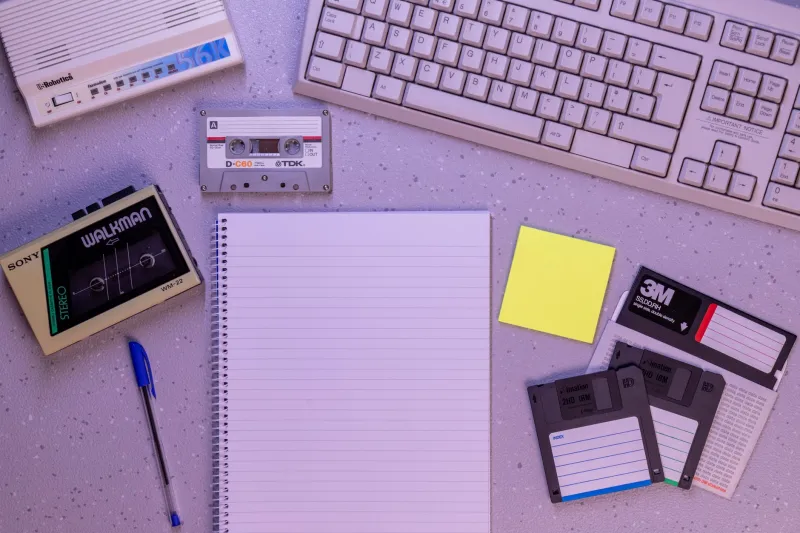
Let's set the scene. It's 2 a.m. on a Tuesday. A software engineer in Portland is refreshing eBay with the kind of intensity most people reserve for playoff games. He's been tracking a listing for three days — a first-generation Apple Desktop Bus Mouse, still in its original packaging, with the cord wrapped exactly the way it left the factory sometime around 1986. The auction ends in four minutes. He has a maximum bid set. He also has a backup account ready, just in case.
This is not unusual behavior. At least, not in his corner of the internet.
It Started With Nostalgia. It Became Something Else.
Vintage computer peripheral collecting — and yes, that's the actual name people use for it — has been quietly building steam for the better part of a decade. What started as a handful of retro computing enthusiasts grabbing old hardware at garage sales has evolved into a legitimate secondary market, complete with dedicated forums, grading systems, price guides, and collectors who think nothing of dropping serious cash on a thirty-year-old pointing device.
The mice are the stars of the show. Keyboards have their own passionate fanbase (that's a whole separate rabbit hole), but something about vintage mice has captured a particular kind of collector energy. Maybe it's the tactile history — these were the objects that first made computers feel intuitive, approachable, human. Or maybe it's just that they're small enough to store without your spouse noticing. Hard to say.
Collectors tend to focus on a few golden eras: the mid-1980s when mice first went mainstream alongside the original Macintosh, the late '80s and early '90s when Microsoft and Logitech were churning out models with names like the IntelliMouse and the Mouseman, and the late '90s when ergonomic design went briefly and gloriously insane. That last period gave us mice shaped like sports cars, mice with built-in fans, mice with so many buttons they looked like they belonged on a fighter jet cockpit.
The Grading System Would Make a Coin Collector Nod in Respect
If you're picturing people just tossing old peripherals in a drawer, think again. The community has developed a surprisingly rigorous condition grading system. "NIB" — New In Box — is the holy grail. "NOS" (New Old Stock) means unused but maybe without original packaging. Then you've got gradations all the way down through "excellent used" to "beater," which is exactly what it sounds like.
The condition of the cord matters enormously. Yellowing of the plastic — a process collectors call "browning" or sometimes the more dramatic "retrobrighting" when they reverse it — affects value significantly. Original foam inserts, original manuals, original warranty cards: all of these can swing a sale price by double digits.
One collector who runs a popular YouTube channel dedicated to vintage peripherals — he asked to just go by his handle, TrackballTerry — described the experience of opening a truly pristine specimen like this: "You get this smell. Old plastic, old foam. It's like a time capsule. I know that sounds unhinged but I promise it makes sense when you're holding one."
It makes sense. We promise.
The White Whales of the Hobby
Every collecting community has its impossible grails, and this one is no different. The original Xerox Alto mouse — the actual grandfather of all modern mice, developed at PARC in the early '70s — is basically museum territory at this point. A few exist in private hands, and they almost never surface.
More practically attainable but still brutally elusive: the early Apple Lisa mouse, certain limited-run Logitech models from the European market that were never widely distributed in the US, and a handful of Japanese-market mice from Fujitsu and NEC that collectors describe with the reverence usually reserved for vintage guitars.
The hunt is genuinely global. Collectors regularly work contacts in Japan, Germany, and the UK to track down models that never made it stateside. There are spreadsheets. There are Discord servers where people post "ISO" (in search of) listings like classified ads. Someone's uncle's neighbor worked at a computer repair shop in 1994 and might have a storage unit full of old stock — this is the kind of lead that gets taken very, very seriously.
What Are These Things Actually Worth?
The price range is wild. Common models in decent condition might run $20 to $50. Rarer variants in excellent condition start climbing toward $100 to $200 pretty quickly. True NIB specimens of iconic models — a first-gen Microsoft Mouse, a pristine early Logitech C7 — can crack $300 to $500 without breaking a sweat at auction.
The absolute top of the market? Collectors talk about private sales in the four-figure range for truly exceptional pieces. Whether those numbers are real or community mythology is genuinely hard to verify, but the fact that people are debating it at all says something.
The secondary market has gotten organized enough that a few small dealers have emerged — people who specialize in sourcing, cleaning, and selling vintage peripherals the way vintage record dealers work their circuit. Some offer restoration services. Some will recap old circuit boards to get a dead mouse working again, which collectors call "bringing it back" and which involves a level of soldering skill that is frankly impressive.
The Ergonomics Arguments Are Legitimately Unhinged (In the Best Way)
Here's where it gets really fun. A significant portion of the community isn't just collecting these mice — they're using them. Daily. And they will explain at considerable length why a 1998 Logitech MouseMan feels better in the hand than anything you can buy today.
The arguments get technical fast. Palm grip versus claw grip versus fingertip grip. The weight of the scroll wheel (or the absence of one, in pre-scroll-wheel models). The actuation force on the buttons. The tracking behavior of ball mice versus early optical sensors. There is genuine, heated, informed disagreement about all of this, and it happens constantly in the forums.
TrackballTerry put it simply: "People think newer is always better. But these companies in the '80s and '90s were solving real problems for the first time. Some of those solutions were honestly more elegant than what we have now. The Logitech Trackman Marble from '95? I'll fight anyone who says that's been improved upon."
He seemed prepared to actually fight someone. We respect the commitment.
Fall In
The vintage computer mouse community is the kind of thing that sounds ridiculous until you spend twenty minutes on one of their forums and suddenly find yourself wondering if that box of old computer junk in your parents' basement might have something interesting in it.
That's the thing about rabbit holes. They always look small from the outside.
If you want to start poking around, the r/VintageApple and r/retrobattlestations communities are reasonable entry points, and there are several dedicated Discord servers that welcome newcomers without too much hazing. eBay remains the primary marketplace, but the real deals — and the real finds — reportedly still come from estate sales, thrift stores, and the occasional lucky score at a computer swap meet.
Just maybe don't start refreshing eBay at 2 a.m. on a Tuesday. Or do. We're not here to judge. We're just here to show you the hole.