These Shoes Have Never Touched the Ground. That's Exactly Why They're Worth $4,000.
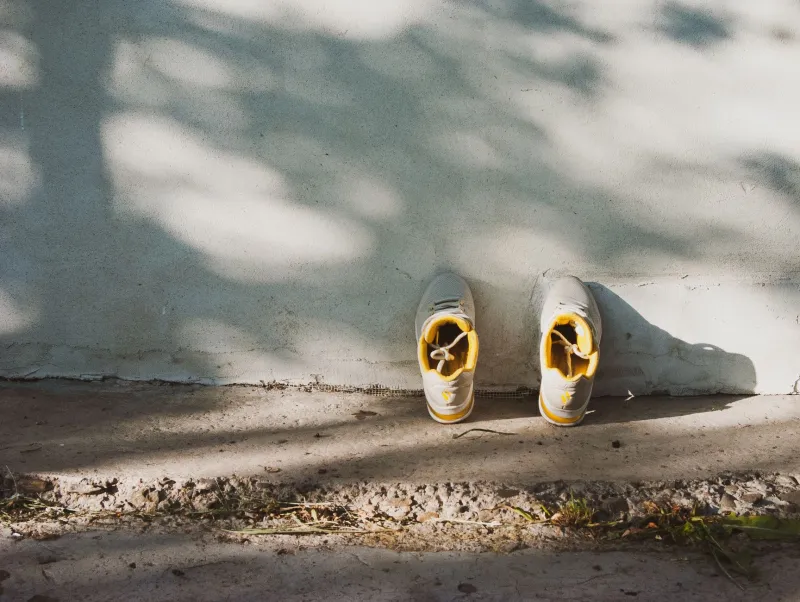
There's a shoe sitting in a climate-controlled room in suburban Ohio. It's been there for about six years. Before that, it spent two decades in its original box, wrapped in the factory tissue paper that a Nike employee in 1994 folded around it before sealing the lid. It has never been worn. It will never be worn. And the guy who owns it paid $3,800 for the privilege of keeping it exactly that way.
His name is Marcus, and he does not think this is weird.
"People buy art they'll never touch," he told me over the phone, speaking with the calm certainty of someone who has defended this position many times before. "People buy cars they never drive. What's the difference?"
Fair point, honestly.
What Even Is Deadstock?
If you're not already deep in sneaker culture, the term "deadstock" might sound like something you'd find in the clearance aisle. In reality, it means the opposite. Deadstock — often abbreviated DS in collector communities — refers to shoes that have never been worn, ideally still in their original packaging, tags intact, factory laces never loosened. The purer the condition, the higher the premium.
The market for these unworn relics has exploded over the past decade. Platforms like StockX, GOAT, and Stadium Goods have turned sneaker reselling into a legitimate secondary economy worth an estimated $6 billion globally. But the real obsession — the one that sends collectors crawling through estate sales, storage unit auctions, and dusty back rooms of closing shoe stores — is deadstock from the '80s, '90s, and early 2000s. These are shoes that were manufactured in limited runs, sold at retail, and somehow never made it onto a single pair of feet.
Finding one is, by all accounts, like finding buried treasure. Except the treasure smells faintly of old rubber and dried glue, and that's somehow part of the appeal.
The Hunt Is Half the Point
Ask any serious collector and they'll tell you: the acquisition story matters almost as much as the shoe itself. There's a whole mythology built around the hunt — the guy who found a deadstock pair of Air Jordan 1s at a Goodwill in rural Tennessee, or the woman who bought a storage unit for $200 and pulled out six pairs of original Reebok Pumps still in their boxes.
These stories circulate through forums, YouTube channels, and Discord servers with the reverence of folk legends. They're aspirational. They keep people digging.
Jordan Fisk, a 29-year-old collector based in Atlanta, describes his first real deadstock find as a "full-body experience." He was at an estate sale and spotted a shoebox shoved under a folding table. Inside: a pair of 1992 Nike Air Max 180s in his exact size, never worn, laces still pinned to the tissue paper.
"I paid twelve dollars," he said, pausing for effect. "I sold them eight months later for eleven hundred."
He did not use that money wisely, he admits. He bought more shoes.
The Authentication Wars
Here's where things get complicated — and a little paranoid.
As prices have climbed into the thousands, the fakes have gotten better. Much better. The counterfeit sneaker industry has evolved to the point where some replicas are nearly indistinguishable from the real thing without expert examination. This has created an entire cottage industry of authentication services, and a culture of deep, sometimes exhausting suspicion within collector communities.
StockX and GOAT both offer authentication before completing sales, but collectors will tell you that even those systems aren't foolproof. The real gatekeepers are the OG collectors — the ones who've handled enough pairs to know what a 1985 Air Jordan 1 midsole is supposed to feel like, what the stitching pattern should look like under a loupe, how the box label font changed between production runs.
These people exist. They are very serious. And they will absolutely call you out on Reddit if your "DS 1987 Nike Dunk" has the wrong heel tab.
"Authentication is basically forensics at this point," says Keisha Monroe, who runs a small authentication consulting service out of Dallas. "I've had people send me shoes they paid five grand for, and I've had to tell them it's a fake. That's not a fun phone call to make."
So Is This Actually an Investment?
The question everyone asks, and the one collectors are most divided on: are these shoes actually worth it as financial assets?
The short answer is: sometimes, for some people, absolutely yes. The longer answer involves a lot of caveats about storage conditions, market timing, and the very real possibility that a shoe's cultural relevance can evaporate overnight.
Sneakers tied to specific cultural moments — a Jordan championship year, a Kanye collaboration, a limited collab that sold out in under a minute — tend to hold or increase their value over time, especially in DS condition. A pair of original Air Jordan 1 "Bred" colorways from 1985 in deadstock condition can fetch $20,000 or more. Some ultra-rare pairs have sold at auction for six figures.
But plenty of collectors have also gotten burned chasing hype that didn't last. The sneaker market, like any collectibles market, runs on vibes as much as fundamentals. A shoe that's worth $800 today might be worth $400 in two years if the cultural conversation moves on.
Marcus, our Ohio collector with the climate-controlled room, is philosophical about it. "I'm not buying these to flip them. I'm buying them because they meant something to me when I was twelve and couldn't afford them. Now I can. That's worth something even if nobody else ever pays me a dime."
The Weird Intimacy of Owning Something Pristine
There's a psychological dimension to deadstock collecting that doesn't get talked about enough — the strange comfort of owning something that time hasn't touched.
In a world where everything degrades, gets scuffed, wears out, and eventually falls apart, a pair of shoes that has somehow survived thirty years in mint condition feels almost like a miracle. It's preservation as a hobby. It's holding onto a version of the past that's still, somehow, intact.
Jordan puts it this way: "When I look at those shoes, I'm looking at something that existed in 1992 and made it here unchanged. Everything else from that year is gone or different. That box, those laces — they're exactly what they were. There's something kind of beautiful about that."
Or, you know, it's just shoes. Really, really expensive shoes that have never seen a sidewalk.
Both things can be true. That's kind of the whole point of falling down this particular rabbit hole — the deeper you go, the harder it gets to explain to people why you're down here, and the less you care about explaining it at all.