200 Hours Later, They're Still Not Done: Inside the Gamers Who Must See Every Ending
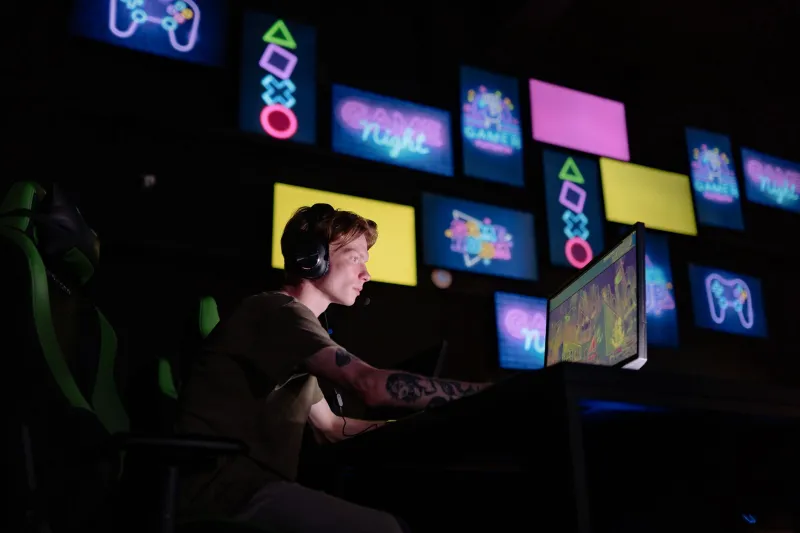
The first time Tyler finished Baldur's Gate 3, he'd put in about 80 hours. He'd made choices, built relationships, watched his story unfold, and sat through the ending with genuine satisfaction. Then he immediately started a new save file.
"I needed to know what happened if I'd done everything differently," he says. "Not just the big choices — all of it. What if I'd sided with the other faction? What if that character had died earlier? What if I'd been completely evil the whole time?"
Three playthroughs and roughly 240 hours later, Tyler is still not done. He has a spreadsheet.
Of course he does.
The Philosophy of 'Complete'
For the average gamer, completion means finishing. You beat the final boss, you watched the ending, you put the controller down. Maybe you grabbed a few achievements along the way. Done.
For the community that's developed around narrative-heavy games — RPGs, visual novels, choice-driven adventures — that definition of completion is almost quaint. These players operate by a different standard: you're not done until you've seen everything. Every branching path. Every divergent outcome. Every piece of hidden lore. Every ending, including the ones the developers buried behind choices so obscure they require a wiki to even know they exist.
This is the world of full-completion players, or "completionists" in the gaming community's own vocabulary — though even that term undersells the depth of commitment involved. These aren't people grinding for trophies. They're treating the game as a text with multiple valid readings, and they intend to read all of them.
"I think of it like a choose-your-own-adventure book where someone tore out half the pages and hid them around the house," says Megan, a 28-year-old in Phoenix who has logged over 300 hours in a single narrative RPG. "You could just read the pages in front of you. Or you could find all of them."
The Spreadsheet Is the Second Game
If you spend any time in the Discord servers and subreddits dedicated to full-completion play, one thing becomes immediately clear: the tracking system is almost as involved as the game itself.
For major titles — games like Disco Elysium, Detroit: Become Human, Cyberpunk 2077, or the aforementioned Baldur's Gate 3 — community members have built shared spreadsheets tracking every known story branch, decision point, and ending variation. These documents can run to hundreds of rows. They're color-coded. They have notes columns. They get updated when someone discovers a previously undocumented outcome, which still happens years after a game's release.
James, a 33-year-old in Denver who moderates one such community, describes the spreadsheet as "a living document." "We'll have a game that came out three years ago, and someone will post that they found a variation on an ending that nobody had documented. The whole community goes a little nuts. It's like finding a new room in a house you thought you knew completely."
The individual spreadsheets players keep for their own runs are equally detailed. Tyler's Baldur's Gate 3 tracker includes columns for playthrough number, character build, major faction choices, companion relationship outcomes, and a notes field where he records anything unexpected. "It's part of how I process the game," he says. "Writing it down helps me understand what I've seen."
The Canon Wars
Here's where things get genuinely heated: when a game offers multiple endings, the question of which one is the "real" one — the canonical ending, in fan community terminology — can generate the kind of passionate, detailed, occasionally unhinged debate that most people reserve for things that actually matter.
And in these communities, it does actually matter.
"I've seen threads go 400 replies deep arguing about which ending of a game is canonical," Megan says, with the fond exasperation of someone who has definitely participated in those threads. "People bring in developer interviews, hidden lore details, thematic analysis. It gets academic."
The debate usually splits into a few camps. There's the "authorial intent" faction, which argues that whatever the developers clearly designed as the intended ending — usually the one that requires the most effort to reach — is the canonical one. There's the "player agency" camp, which holds that in a choice-driven game, canon is whatever you chose, and the whole point is that there is no singular truth. And then there's a third, more chaotic faction that argues the "worst" ending is the most interesting one and everyone else is playing it wrong.
"The bad endings are where games get honest," argues Derek, a 25-year-old in Chicago who has a specific reputation in his community for championing catastrophic outcomes. "The developers had to think hard about what failure looks like. That's as much a part of the story as the triumphant ending."
Why Replay When You Could Just Watch?
This is the question that outsiders — and some gamers — raise. In 2024, virtually every ending of every major game is on YouTube within 48 hours of release. If you want to see what happens when you make different choices, you could just... watch someone else do it.
The completionists find this suggestion borderline offensive.
"Watching someone else's choices isn't the same as making them," Tyler says, with the quiet certainty of someone who has thought about this a lot. "The whole point of a choice-driven game is that you carry the weight of the decision. Watching a video, you're just a spectator. You didn't actually choose to let that character die. You watched someone else choose it. That's completely different."
Megan frames it in terms of earned experience. "When I finally got to an ending I'd been trying to unlock for 40 hours, it hit differently than it would have on YouTube. I'd lived the whole path that led there. The ending meant something because of everything that came before it — and that 'before' was mine."
The 200-Hour Commitment
There's an obvious question lurking here about time. These are people spending 200, 300, sometimes 400+ hours on a single game. That's not a weekend hobby — that's a significant portion of a year's leisure time, concentrated in one place.
Most completionists are pretty relaxed about this. They're not burning through a game in marathon sessions; they're returning to it over months, sometimes years, picking it up when they feel like it, putting it down when they don't. The long timeline is part of the appeal — it means the game becomes a kind of companion rather than a product to be consumed and discarded.
"I've been playing the same game for two years," James says. "Not constantly — I take breaks, play other things. But I keep coming back because I'm not done yet. I don't think that's strange. People reread books. People rewatch movies. This is the same thing, except the story actually changes."
Tyler, for his part, is on playthrough four. He's found three endings he hadn't seen before, documented two previously unrecorded dialogue variations, and updated the community spreadsheet twice this month.
"Am I done?" he says. "Not even close. I think there's a whole storyline I haven't triggered yet." He sounds genuinely delighted about this.
The credits, after all, are just the beginning.