Cork, Color Code, Repeat: Meet the Wine Drinkers Who've Turned Their Hobby Into a Database
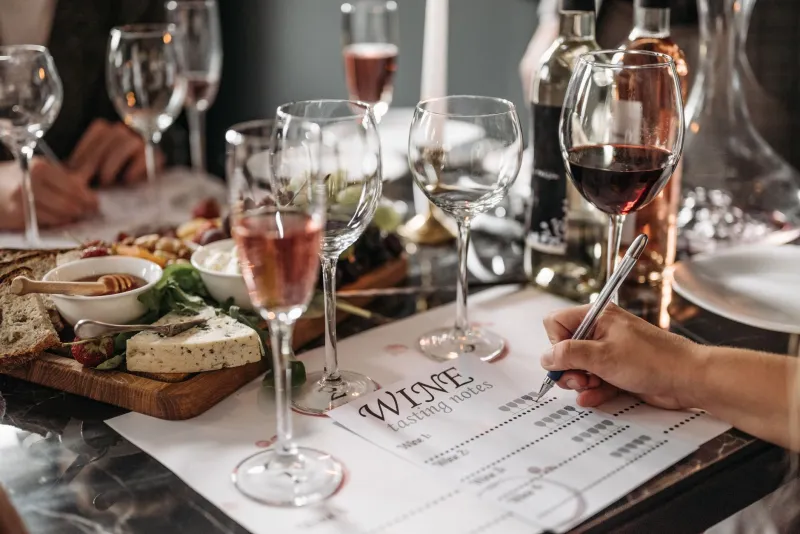
Somewhere in suburban Ohio, a guy named Derek is finishing the last sip of a 2019 Sonoma Coast Pinot Noir. He sets the glass down, wipes his mouth, and does what any reasonable person would do next: opens a Google Sheet with 847 rows and starts typing.
Nose: dried cherry, forest floor, faint eucalyptus. Palate: medium-plus acidity, silky tannins, long finish. Food pairing score: 8.4 out of 10. Cellar potential: 3–6 years. Personal rating: 91 points. Then he color-codes the row — burnt orange for Pinot Noir — and cross-references it against the seventeen other Sonoma Pinots he's logged since 2017.
Derek is not a professional wine critic. He doesn't write for a publication or consult for a restaurant. He's an IT project manager who got really into wine during a pandemic with nothing else to do, and now he maintains what he casually describes as "just a little tracker." It has conditional formatting, a pivot table dashboard, and a tab specifically for bottles he regrets opening too early.
He is not alone.
The Notebook Was Never Enough
Wine journaling has existed for as long as people have had opinions about fermented grapes. The classic version — a leather-bound notebook with scrawled impressions and the occasional stained page — is charming, sure. But for a growing subset of American wine enthusiasts, analog just doesn't cut it anymore.
These are people who want to query their tasting history. Who want to know, on demand, which Napa Cabernets they've rated above 90 points, how many wines from Oregon they've tried in the last two years, and whether there's a correlation between the price they paid and the score they gave. (Spoiler: there often isn't, and discovering that is its own kind of rabbit hole.)
The tools vary. Some people use Airtable. Others are die-hard Google Sheets loyalists. A dedicated few have built out Notion databases with cover art, producer profiles, and embedded maps showing the wine's appellation. There are even people who've learned basic SQL just so they can run more interesting queries on their own tasting history. For wine.
The Rating System Rabbit Hole
Here's where things get genuinely fascinating: almost nobody in this community uses the same scoring system. The 100-point scale is the obvious starting point — it's what Wine Spectator uses, it's what Robert Parker made famous — but plenty of hobbyists find it clunky. Do you really need a hundred gradations? Is there a meaningful difference between an 88 and an 89?
Some people use a 20-point scale. Others go full academic and adopt the Davis 20-point system developed at UC Davis, which breaks flavor into specific weighted categories. There are five-star folks, ten-point folks, and at least one Reddit user who rates wines on a simple three-tier system: Drink Again, Maybe, and Pour It Down the Sink.
Then there are the people who've invented their own hybrid systems. One woman in the r/wine community built a weighted scoring model that accounts separately for value (what she paid versus what she expected), quality (objective tasting notes), and mood match — basically, how well the wine suited the moment she was drinking it. A bottle of cheap Lambrusco at a backyard cookout might score higher on mood match than a $90 Burgundy she opened on a Tuesday night feeling stressed about work.
"It sounds ridiculous," she wrote in a forum post that got over 400 upvotes, "but it's actually made me enjoy wine more because I stopped chasing scores and started chasing experiences."
The Cellar Tracking Problem
For people who actually buy wine to age, the spreadsheet hobby takes on a whole new dimension. Cellaring wine — holding onto bottles for years before opening them — requires some level of tracking, or you end up doing what countless people have done: forgetting about a case in the basement until the wine is completely over the hill.
But hobbyist cellar trackers aren't just logging what they own. They're forecasting. They're building in "drink windows" — estimates of when a wine will hit its peak — and setting calendar reminders years in advance. Some are tracking temperature logs from their wine fridges. A few have integrated their spreadsheets with weather APIs to monitor humidity fluctuations.
Apps like Cellar Tracker exist for exactly this purpose and have a devoted following, but the spreadsheet crowd tends to view apps with mild suspicion. Too much control handed over to someone else's interface. Too few customization options. If your cellar database doesn't look exactly the way you want it to look, what's even the point?
The Communities That Grew Up Around the Obsession
What started as a solo hobby has quietly become a social one. Subreddits, Discord servers, and Facebook groups dedicated to wine tracking have built small but intensely engaged communities where people share spreadsheet templates, debate rating philosophies, and occasionally post screenshots of their dashboards the way other people post vacation photos.
These communities have their own inside jokes, their own debates, their own occasional drama. (The 100-point vs. 20-point discourse gets heated.) But mostly they're a place where people who've been told they're "a little too into this" can find their people.
Some of the friendships that have formed are genuinely unexpected. A retired teacher in Vermont and a software engineer in Austin have been swapping bottle recommendations and spreadsheet updates for three years, despite never meeting in person. A group of six people from different states organized a virtual tasting specifically so they could compare how each of them scored the same wine — and then spent two hours arguing about why their numbers diverged.
"Wine is the excuse," one of them said. "The spreadsheet is what we actually have in common."
So Is This Weird? (Yes. Also No.)
Let's be honest: spending forty-five minutes logging a single bottle of wine is, by most definitions, a lot. The people who do this know it. They make self-deprecating jokes about it constantly. They're aware that the average person opens a bottle, drinks it, maybe mentions it was good, and moves on with their lives.
But there's something genuinely interesting happening underneath all the conditional formatting. These hobbyists are building a personal record of taste — a longitudinal document of how their palates have evolved, what regions they've gravitated toward, which producers they keep coming back to. Over years, a wine database stops being just a spreadsheet and starts being something closer to a memoir.
Derek in Ohio now has six years of data. He can tell you exactly when he stopped defaulting to California Cabs and started obsessing over Loire Valley reds. He can show you the specific bottle that made him care about natural wine, and the one that made him stop. His spreadsheet is, in a weird and completely earnest way, a document of who he's become.
He opened another bottle while we were talking. Gave it a 93. Color-coded it purple for Syrah.
Some hobbies just make sense once you're in deep enough.