The Last Whiff: Meet the People Racing to Document Smells Before They Vanish Forever
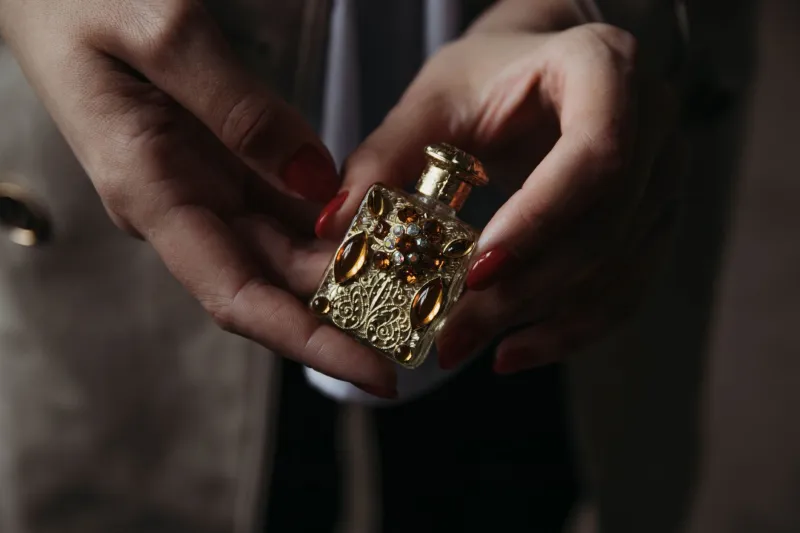
There's a perfume called Diorella that Dior released in 1972. It still technically exists — you can buy it today. But if you talk to anyone in the fragrance community who owned a bottle from the original 1970s or early 1980s production run, they will tell you, with complete sincerity, that what you're buying now is not the same thing. The formula has changed. The materials are different. A key ingredient — oakmoss, a natural fixative that the EU has increasingly restricted due to allergen concerns — is either absent or present in a fraction of its original quantity.
The smell, in other words, is gone. What remains is a legal approximation wearing the same name.
This is, to a specific and passionate community of people, a genuine cultural loss worth documenting. And so they are documenting it — in painstaking, sometimes obsessive detail.
The Archive Nobody Built
If you want to preserve a painting, there are institutions for that. If you want to archive a piece of music, a film, a book, a newspaper, a radio broadcast — there are systems, organizations, and cultural frameworks for all of it. We have spent enormous collective energy deciding that visual and auditory culture is worth saving.
Smell got almost nothing.
This is partly a practical problem: scent doesn't record. You can't press it onto a disc or capture it in a JPEG. Describing a smell in words is notoriously difficult — our olfactory vocabulary in English is genuinely impoverished compared to our visual vocabulary, which is why perfume descriptions tend to default to metaphor and abstraction. ("It smells like a walk through a forest after rain" is technically a description, but it's not exactly archival data.)
But it's also a cultural problem. Smell has long been considered the least intellectual of the senses — associated with the body, with animals, with emotion rather than reason. For most of Western cultural history, sight and sound got the prestige. Smell got the candle aisle at Bath & Body Works.
A growing community of fragrance enthusiasts, sensory historians, and flat-out obsessives is pushing back against that hierarchy, and what they're building — scattered across forums, YouTube channels, Discord servers, and a handful of dedicated websites — is something that looks a lot like a grassroots sensory archive.
What Documenting a Smell Actually Looks Like
The methods vary enormously depending on who you're talking to.
At the more technical end, there are people with genuine chemistry backgrounds who are attempting to document the molecular composition of discontinued fragrances — tracking down old patents, analyzing ingredient lists from vintage promotional materials, and in some cases sending samples to labs for gas chromatography analysis. This is expensive, time-consuming, and produces results that are technically rigorous but not exactly accessible to a general audience.
More common is what you might call oral history collection: detailed written and recorded accounts from people who actually wore or experienced a specific scent. What did it smell like on first application? How did it evolve over an hour, two hours, a day? What did it remind you of? What did other people say about it? When did you first wear it, and what was happening in your life?
Lena, a 52-year-old from the Philadelphia area who runs a fragrance blog and has been collecting vintage perfume for nearly twenty years, has been conducting informal oral history interviews for the past three years, focused specifically on fragrances that have been discontinued or significantly reformulated.
"I've talked to maybe 200 people so far," she says. "I record everything. I'm building a document — it's not published anywhere, it's just this enormous file — of what these things actually smelled like to actual humans who wore them."
Her most-documented subject so far is the original formula of Chanel No. 19, which longtime wearers describe as substantially different from the current version. "I have forty-seven separate accounts," she says. "Forty-seven people describing the same perfume, and the consistency is remarkable. You start to see a picture."
The Reformulation Wars
To understand why this archival impulse exists, you need to understand what has happened to the fragrance industry over the last thirty years — specifically, the twin pressures of ingredient restriction and cost-cutting that have quietly transformed the smell of almost every major perfume on the market.
The International Fragrance Association, known as IFRA, has issued successive rounds of guidelines restricting or banning ingredients that have been identified as potential allergens or environmental hazards. Oakmoss. Civet. Peru balsam. Nitromusks. Many of these ingredients were the backbone of classic mid-century fragrances — the animalic, earthy, deeply complex base notes that gave perfumes from the 1950s through the 1980s their particular character.
Simultaneously, fragrance houses have reformulated products to reduce costs, replacing expensive natural ingredients with cheaper synthetics. The results are often technically similar but experientially different — cleaner, thinner, less persistent, missing whatever ineffable quality the original had.
For longtime wearers, this is experienced as a genuine loss. Imagine if your favorite song were re-recorded with slightly different instruments, and the original master was destroyed. That's more or less what happened to a significant portion of the classic fragrance canon.
This is the loss the archivists are trying to document before the last people who remember the originals are gone.
The Smell Memory Problem
Here's the frustrating part: smell memory is simultaneously the most powerful and the most fragile kind of memory we have.
Neuroscientists have documented extensively that olfactory memories are processed differently from other sensory memories — they route through the brain's limbic system in a way that gives them unusual emotional intensity and durability. The phenomenon where a smell suddenly transports you back twenty years is real, well-documented, and has a name: the Proust effect, after the famous madeleine passage in In Search of Lost Time.
But smell memories are also highly dependent on re-exposure to work properly. You can describe a smell in words, but the description can't trigger the memory the way the actual smell can. And once the smell no longer exists — once the formula is gone, the product discontinued, the factory closed — the memory becomes increasingly difficult to access, and eventually, when the last person who experienced it is gone, it's simply lost.
This is what drives the urgency in the archival community. It's not just about perfume. Collectors are also documenting regional food smells — the specific scent of certain regional grocery chains, the smell of department stores that no longer exist, the industrial smells of towns built around industries that have since moved or shut down. There are ongoing projects to document the smell of libraries using older book stocks, the smell of specific hardware stores, the smell of the New York City subway in the 1980s (described, consistently and enthusiastically, as absolutely terrible, but still considered worth preserving).
What We're Actually Trying to Save
At its core, this is a project about identity — personal, cultural, generational. The argument the scent archivists are making is that olfactory experience is a legitimate form of cultural heritage, as worth preserving as any photograph or film reel, and that we've been negligent about it for too long.
The tools are imperfect. Words can't fully capture a smell. Oral histories decay with the people who hold them. Even the most rigorous chemical analysis can't guarantee a reconstruction will smell the same as the original.
But something is better than nothing. A forty-seven-person oral history of a discontinued perfume is not the perfume — but it's a record that the perfume existed, that it mattered, that real people wore it to weddings and funerals and first dates and carried it with them for decades.
"I'm not trying to recreate anything," Lena says. "I just want there to be a record that it was real. That it was beautiful. That people loved it."
That feels like enough of a reason.