Spending $400 on a Plastic Robot You Had at Age Seven Is Completely Rational, Actually
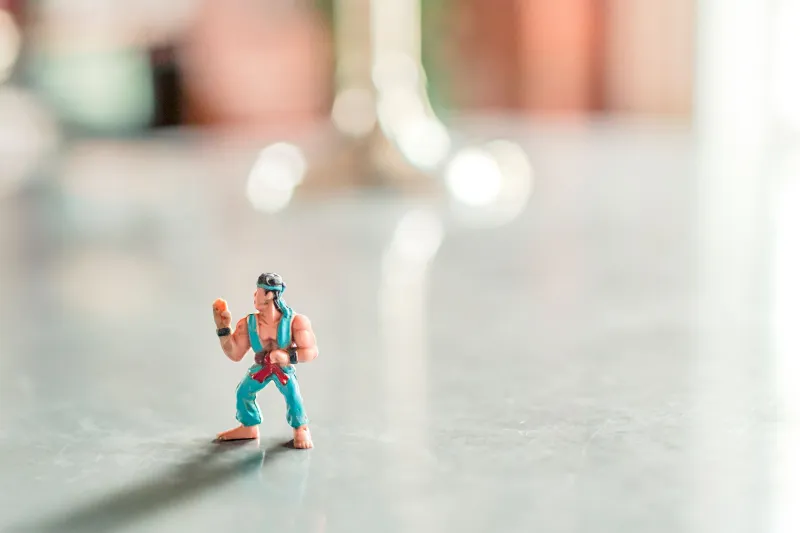
There is a sealed, mint-condition Mighty Morphin Power Rangers Megazord sitting in a climate-controlled storage unit in Tempe, Arizona. It belongs to a 38-year-old software engineer named Marcus who paid $340 for it on eBay eighteen months ago. He has not opened it. He will not open it. He describes owning it as "genuinely calming."
He also owns the exact same Megazord — open, played-with, missing one arm — that he got for Christmas in 1994 and has carried through four apartments and two cross-country moves. That one lives on his desk at home.
"The sealed one is an investment," Marcus says. "The broken one is just mine."
This is, more or less, the emotional and financial logic powering one of the more fascinating collector economies of the past five years: the premium nostalgia toy market, where discontinued action figures, vintage dolls, and obscure childhood relics from the late 80s and 90s are changing hands for prices that would make your parents deeply uncomfortable.
The Numbers Are Not Playing Around
Let's talk about what's actually happening at the high end of this market, because the prices are genuinely wild.
A first-edition Furby in original packaging recently sold for over $900 on eBay. Certain rare Polly Pocket playsets from the early 90s — the small, hard-plastic clam-shell kind — routinely fetch $200 to $500 depending on condition. Original-run Tamagotchis in their packaging can clear $150 easily. And if you want to talk about Star Wars, G.I. Joe, or original-run Transformers? We're into four-figure territory without blinking.
The really interesting action, though, isn't at the collector-show level with serious vintage dealers. It's happening on Facebook Marketplace, eBay, Mercari, and dedicated Discord servers where millennials in their 30s and early 40s are trading toys they had, toys they wanted but never got, and toys they've never personally encountered but have decided represent something important about their childhoods.
Resellers have absolutely noticed. There's an entire economy of people who haunt thrift stores, estate sales, and garage sales specifically hunting for 90s toys to flip. A $3 Goodwill find can become a $200 eBay listing if you know what you're looking for.
The Psychology Is Doing a Lot of Heavy Lifting Here
So why is a generation of adults spending real money on plastic toys? The easy answer is nostalgia, but that word gets thrown around so much it's lost most of its explanatory power. The more interesting question is: what specifically is the nostalgia doing for people?
There's a concept in psychology sometimes called "nostalgia as self-continuity" — the idea that connecting with objects and experiences from your past helps reinforce a sense of who you are across time. When the present feels chaotic or uncertain (and the past decade has offered millennials plenty of both), reaching backward toward a concrete, tangible version of your childhood self can feel genuinely stabilizing.
There's also the matter of what many millennials didn't get to keep. Childhood toys got thrown out by parents during clean-outs. They got donated, broken, lost in moves. Buying back the exact object you had at age eight isn't just nostalgia — it's a kind of retrieval. You're completing something.
And then, yes, there's the investment angle. A generation that entered the workforce during the 2008 financial crisis, faced a housing market that seems designed to exclude them, and watched traditional retirement savings vehicles underperform has found themselves oddly interested in alternative stores of value. Vintage toys, like vintage sneakers and trading cards, have demonstrated real appreciation over time. It's not crazy to buy a sealed toy as an asset.
It's just also maybe not entirely about that.
The Community Is Its Own Thing
What makes this more than just a shopping habit is the social infrastructure built around it. The nostalgia toy community is deeply online in ways that amplify everything — the enthusiasm, the gatekeeping, the drama, and the genuine connection.
YouTube channels dedicated to vintage toy unboxings and collection tours pull hundreds of thousands of views. "Haul" videos where collectors show recent acquisitions get engagement that lifestyle influencers would envy. There are Discord servers with thousands of members organized by specific toy lines — one for He-Man, one for original My Little Pony, one specifically for 90s McDonald's Happy Meal toys, which is apparently a whole thing.
The gatekeeping, predictably, is intense. Debates about what counts as "authentic" collecting versus flipping for profit are constant. There's a class dimension that doesn't go undiscussed — the fact that the toys commanding the highest prices are increasingly only accessible to people with significant disposable income creates friction in communities that started as spaces for enthusiasts of all economic backgrounds.
And then there's the sealed-versus-opened debate, which mirrors the sourdough hydration argument in its passion and its fundamental irresolvability. Is a toy really yours if it's never been touched? Is the point to preserve or to play?
Arrested Development or Totally Fine?
Look, the think-pieces about millennials refusing to grow up have been circulating since approximately 2009, and they have mostly been wrong and a little condescending. Adults have always collected things that connected them to their pasts. Baseball cards, vintage cars, first-edition books — the impulse to hold onto something from another time is not new and it's not a pathology.
What is relatively new is the scale, the prices, and the degree to which a specific generational cohort has collectively decided that the particular artifacts of their 1990s childhoods are worth preserving and pursuing. That's partly market forces, partly internet community dynamics, and partly something genuinely emotional that's harder to quantify.
Marcus, back in Tempe, doesn't spend a lot of time analyzing it. He knows the sealed Megazord is probably going to be worth more in five years than it is today. He knows the broken one is worth nothing to anyone but him. He also knows that having both of them in the same house makes him feel, in some way he can't quite articulate, like he's got his whole timeline in order.
That seems worth something, even if you can't list it on eBay.
The toys are out there. The rabbit hole goes deep. And somewhere, right now, someone is deciding whether $275 is a reasonable price for a complete-in-box Tamagotchi Angel.
It is. Obviously it is. Don't even think about it.