pH Me Later: The Water Nerds Who've Turned Hydration Into a Full-Blown Science Project
Somewhere in Portland, Oregon, a man named Derek is swirling a small glass of municipal tap water like it's a 2019 Burgundy. He sniffs it. He sips it. He holds it in his mouth for exactly four seconds. Then he opens a laptop and types a number into a spreadsheet that already contains 847 entries.
The entry reads: Portland, OR — Bull Run Watershed tap, collected 7:14am, pH 7.2, hardness 17 ppm, chlorine detectable, mouthfeel: light, finish: clean with faint mineral note. Rating: 84/100.
Derek is not a scientist. He's a middle school PE teacher. And he is absolutely not alone.
Welcome to the world of competitive water tasting — a hyper-niche hobby where enthusiasts track, rank, and obsessively compare water sources the way other people track bourbon releases or baseball stats. It sounds absurd. It also makes a strange, compelling kind of sense once you fall into it.
It Started With a Disagreement About Ice
For a lot of people in this community, the origin story is almost embarrassingly mundane. Someone noticed that coffee tasted different on vacation. Or that their sourdough starter behaved weirdly after they moved cities. Or, in Derek's case, that the ice at a specific McDonald's in Boise just hit different.
"I know how that sounds," he says, laughing. "But I started Googling why, and then I found out about water hardness and mineral content and how dramatically it affects flavor, and I was just... gone. Three hours later I had a TDS meter on order from Amazon."
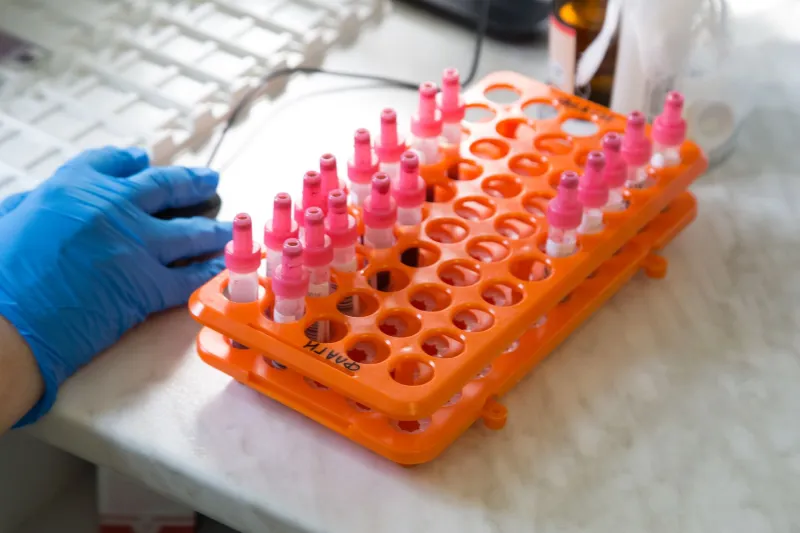
TDS stands for Total Dissolved Solids — the measure of minerals, salts, and other compounds suspended in water. It's one of the core metrics in this hobby, alongside pH, hardness, alkalinity, and what enthusiasts call "mouthfeel," which is exactly as subjective as it sounds.
The community largely lives on a handful of forums, a few active subreddits, and a Discord server called AquaLog that has just under 2,400 members. It skews male, skews toward the Pacific Northwest and the Northeast, and has a significant overlap with the specialty coffee world, where water chemistry has been taken seriously for years.
The Database Is the Hobby
What separates casual water curiosity from full-on obsession is the documentation. These aren't people who just notice that Evian tastes different from Fiji. They're building structured, searchable records of every water source they encounter.
Marissa, a graphic designer in Chicago, maintains what she calls her "water passport" — a Google Sheet with custom conditional formatting that color-codes every entry by pH range. Blues for alkaline, yellows for neutral, oranges for anything acidic. She's logged 312 sources across 14 states, including seven different Chicago tap water samples collected from different neighborhoods over 18 months.
"The city's water changes seasonally," she explains, with the enthusiasm of someone who has clearly waited for someone to ask. "They pull from different parts of Lake Michigan depending on conditions, and you can taste it if you pay attention. Most people don't pay attention."
She does blind taste tests on herself using labeled but visually identical cups. She tracks her own accuracy. She has a calibration protocol.
The Travel Itinerary Problem
Here's where it gets genuinely interesting: a subset of this community has started planning travel around water sampling. Not just for water — they're not that far gone — but it's definitely a factor.
Tom, a retired logistics manager from outside Nashville, took a road trip last summer that covered six states. His stated goal was to visit national parks. His unstated goal, which his wife is fully aware of and only mildly exasperated by, was to collect water samples from natural springs along the route.
"There are springs all over Appalachia that people have been drinking from for generations," he says. "Some of them have been tested, some haven't. I bring my own testing kit and I log everything. I've got spring water from eastern Tennessee that scores higher on my personal preference index than anything I've ever bought at Whole Foods."
The "personal preference index" is a weighted scoring system Tom built himself in Excel. Mineral content accounts for 30%, pH for 20%, and taste — broken into categories like finish, mouthfeel, and what he calls "presence" — makes up the rest. He acknowledges this is completely subjective. He does not think that makes it less valid.
The Mineral Water Snobs Are a Whole Subsection
If the tap water folks are the hobbyists, the imported mineral water collectors are the connoisseurs — and they will absolutely let you know it.
Fine mineral water has a genuine enthusiast culture, particularly around European sources like Acqua Panna, Gerolsteiner, and the famously polarizing ROI from Slovenia, which has so many dissolved minerals it tastes like someone wrung out a geology textbook. There are restaurants in New York and Los Angeles with dedicated water menus. There's a Fine Water Society. There are certified water sommeliers — yes, that's a real credential.
The overlap between that world and the DIY spreadsheet crowd is imperfect but real. Both groups agree that water has flavor. Both groups think most Americans are deeply missing something by treating hydration as purely functional. And both groups will, if you let them, talk about water for a very long time.
What Are They Actually Looking For?
That's the question underneath all of this, right? Why does this matter to people?
The answers vary. For some, it's the scientific angle — water chemistry is genuinely complex and learning it scratches an intellectual itch. For others, it's about paying attention to something everyone ignores, finding signal in noise. For a few, it connects to environmental concerns: tracking how their local tap water changes over time feels like a form of citizen monitoring.
Marissa puts it simply: "I spend a lot of time being told I'm too much. Too detailed, too obsessive, too whatever. But in this hobby, nobody thinks that. Everyone's too much. It's kind of wonderful."
Derek, back in Portland, has just finished logging his morning sample. He closes the laptop, finishes his glass, and starts making coffee — with filtered water, obviously, adjusted to a specific mineral profile he worked out over six months of testing.
"It makes better coffee," he says. "That's the practical upside. Everything else is just fun."
Just fun. Sure, Derek. We believe you.